












Instructions

SDS

TheraCal PT Base SDS US English
English
TheraCal PT Cataylst SDS US English
English
TheraCal PT Base SDS INT English
English
TheraCal PT Base SDS INT Albanian
Albanian
TheraCal PT Base SDS INT Bulgarian
Bulgarian
TheraCal PT Base SDS INT Croatian
Croatian
TheraCal PT Base SDS INT Czech
Czech
TheraCal PT Base SDS INT Danish
Danish
TheraCal PT Base SDS INT Dutch
Dutch
TheraCal PT Base SDS INT Estonian
Estonian
TheraCal PT Base SDS INT Finnish
Finnish
TheraCal PT Base SDS INT French
French
TheraCal PT Base SDS INT German
German
TheraCal PT Base SDS INT Greek
Greek
TheraCal PT Base SDS INT Hungarian
Hungarian
TheraCal PT Base SDS INT Icelandic
Icelandic
TheraCal PT Base SDS INT Italian
Italian
TheraCal PT Base SDS INT Latvian
Latvian
TheraCal PT Base SDS INT Lithuanian
Lithuanian
TheraCal PT Base SDS INT Macedonian
Macedonian
TheraCal PT Base SDS INT Norwegian
Norwegian
TheraCal PT Base SDS INT Polish
Polish
TheraCal PT Base SDS INT Portuguese
Portuguese
TheraCal PT Base SDS INT Romanian
Romanian
TheraCal PT Base SDS INT Russian
Russian
TheraCal PT Base SDS INT Slovak
Slovak
TheraCal PT Base SDS INT Slovenian
Slovenian
TheraCal PT Base SDS INT Spanish
Spanish
TheraCal PT Base SDS INT Turkish
Turkish
TheraCal PT Cataylst SDS INT English
English
TheraCal PT Cataylst SDS INT Albanian
Albanian
TheraCal PT Cataylst SDS INT Bulgarian
Bulgarian
TheraCal PT Cataylst SDS INT Croatian
Croatian
TheraCal PT Cataylst SDS INT Czech
Czech
TheraCal PT Cataylst SDS INT Danish
Danish
TheraCal PT Cataylst SDS INT Dutch
Dutch
TheraCal PT Cataylst SDS INT Estonian
Estonian
TheraCal PT Cataylst SDS INT Finnish
Finnish
TheraCal PT Cataylst SDS INT French
French
TheraCal PT Cataylst SDS INT German
German
TheraCal PT Cataylst SDS INT Hungarian
Hungarian
TheraCal PT Cataylst SDS INT Icelandic
Icelandic
TheraCal PT Cataylst SDS INT Italian
Italian
TheraCal PT Cataylst SDS INT Latvian
Latvian
TheraCal PT Cataylst SDS INT Lithuanian
Lithuanian
TheraCal PT Cataylst SDS INT Macedonian
Macedonian
TheraCal PT Cataylst SDS INT Norwegian
Norwegian
TheraCal PT Cataylst SDS INT Polish
Polish
TheraCal PT Cataylst SDS INT Portuguese
Portuguese
TheraCal PT Cataylst SDS INT Romanian
Romanian
TheraCal PT Cataylst SDS INT Russian
Russian
TheraCal PT Cataylst SDS INT Slovak
Slovak
TheraCal PT Cataylst SDS INT Slovenian
Slovenian
TheraCal PT Cataylst SDS INT Spanish
Spanish
TheraCal PT Cataylst SDS INT Turkish
Turkish
TheraCal PT Base SDS INT Swedish
Swedish
TheraCal PT Cataylst SDS INT Greek
Greek
TheraCal PT Cataylst SDS INT Swedish
Swedish
TheraCal PT Cataylst SDS INT Hungarian
HungarianAwards

Clinical Problem Solver

Dental Advisor Top Pediatric Product

Dental Advisor Preferred Pediatric Product

Dental Advisor Editors Choice

DPS Recommend Product
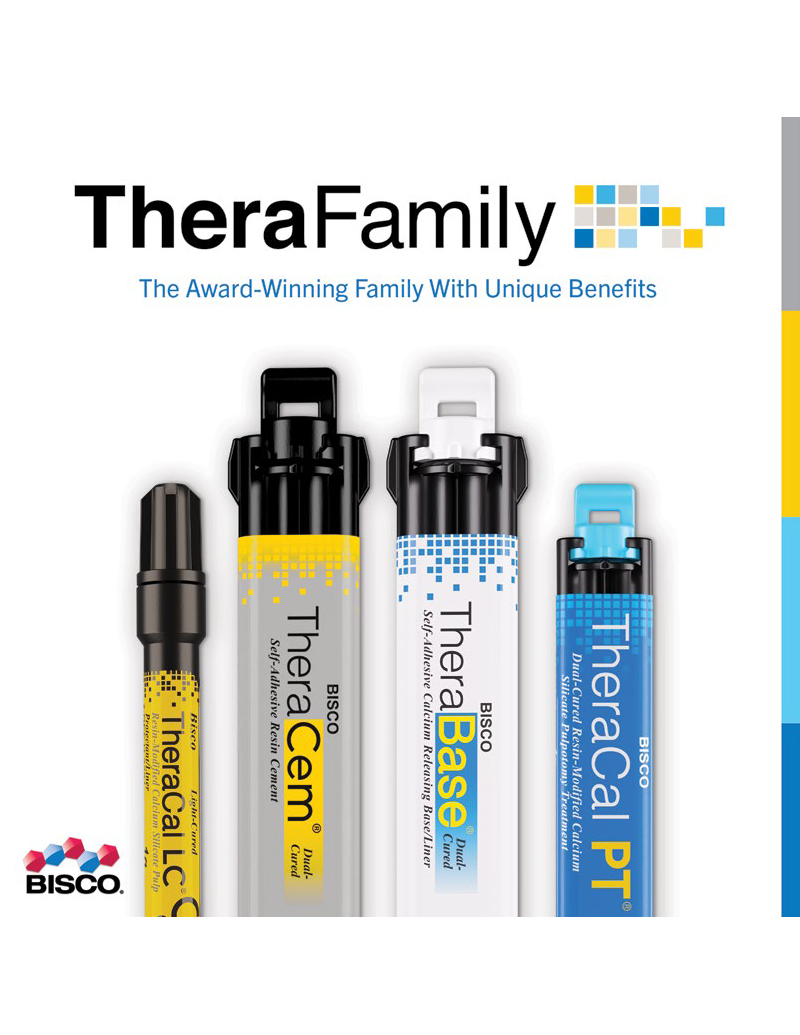
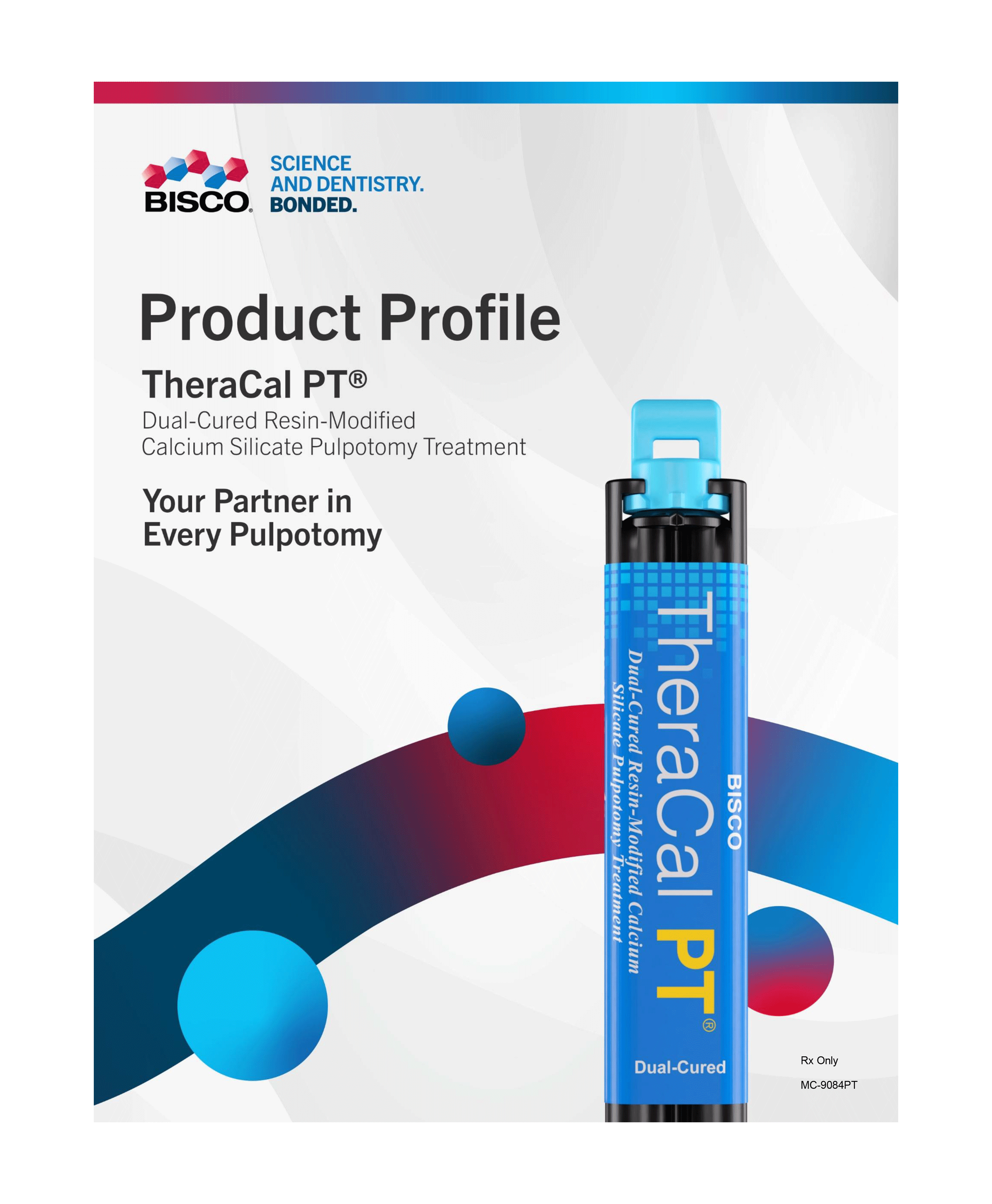
TheraCal PT and TheraCal LC – is there a reason to have both?
TheraCal PT is not intended to replace TheraCal LC.
TheraCal PT and TheraCal LC share some of the same indications for use, however we recommend you use TheraCal PT for pulpotomies and continue to use TheraCal LC as a liner and for direct and indirect pulp capping. This approach is more cost effective based on the number of applications from 1 box of TheraCal LC (4 - 1g syringes = 40-50 uses depending on application/s) verses TheraCal PT's 1 - 4g syringe (approximately 12 - 15 pulpotomy applications).
What are the indications for TheraCal PT?
Primary indication: Pulpotomies
TheraCal PT can also be used for pulp capping, and as a liner or base.
What is the shelf life of TheraCal PT?
18 Months. TheraCal PT syringe is pouched and should remain so until ready to use. Once pouch is opened, use TheraCal PT within 90 days.
What is the storage for TheraCal PT?
TheraCal PT should be stored at room temperature (68°-77° F; 20°-25° C)
What is the working time?
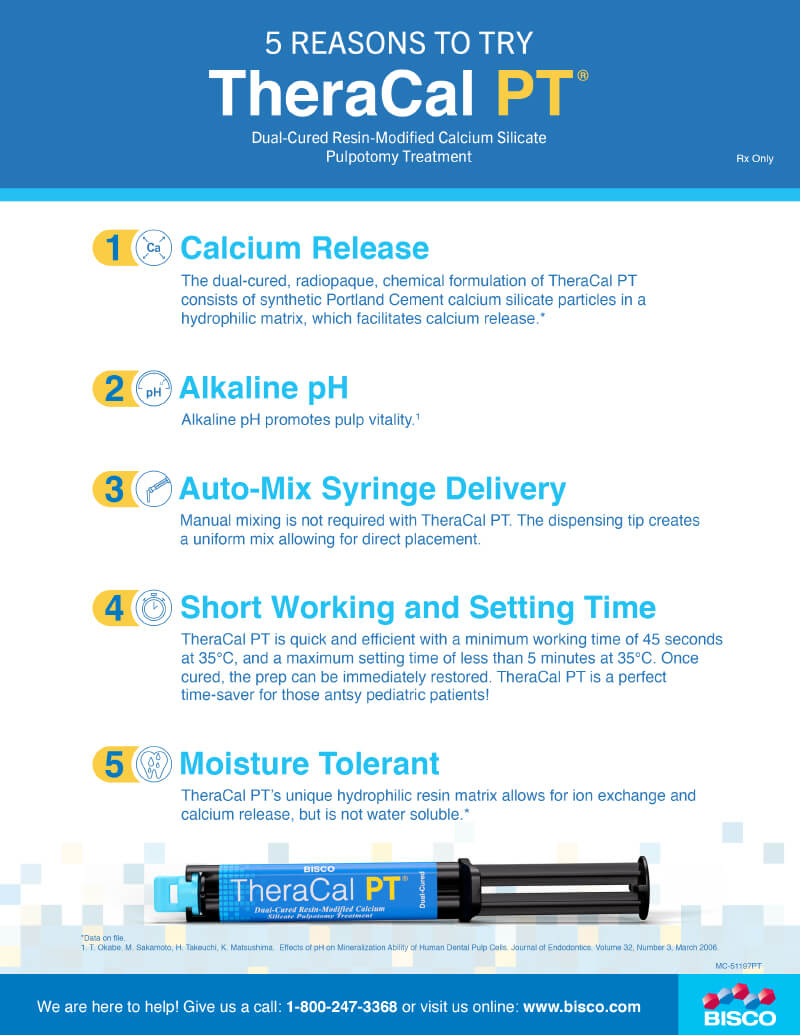
Minimum of 45 seconds
What is the setting time?
Maximum of 5 minutes
How many applications can you get out of the 4g syringe of TheraCal PT?
Approximately 12 – 15 pulpotomy applications
What is the color of TheraCal PT?
A1/Natural
Do you need to place a bonding agent first?
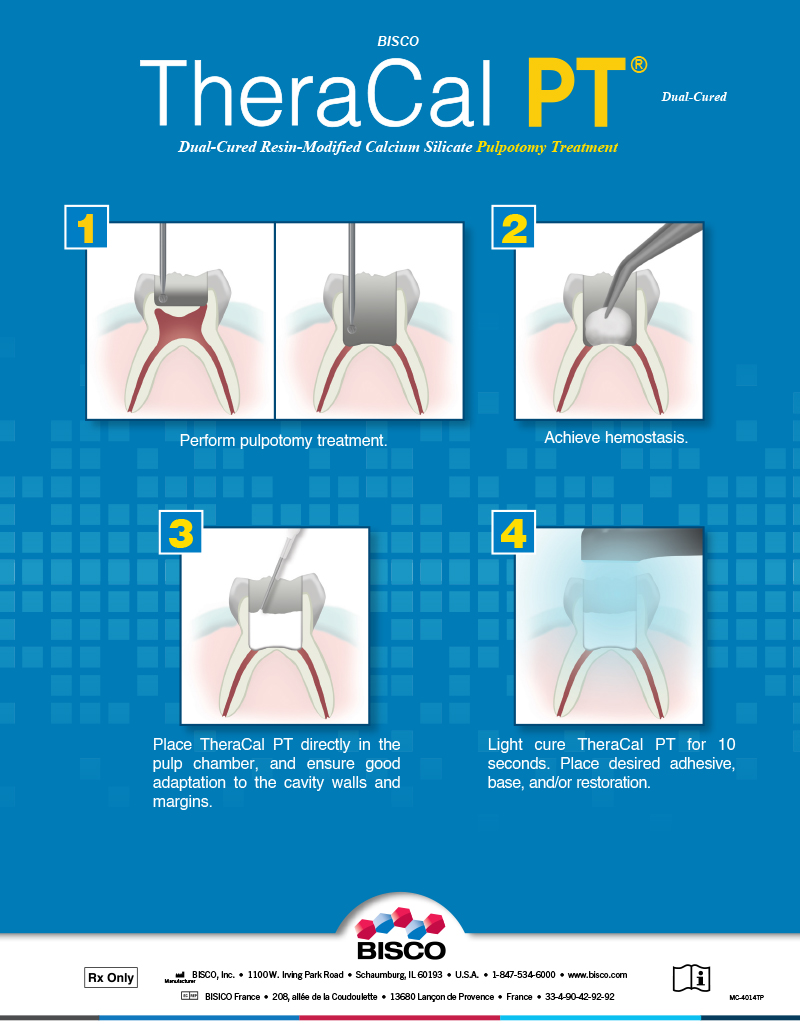
No. Achieve hemostasis, place TheraCal PT, light-cure for 10 seconds and place desired adhesive, base, and/or restoration following manufacturer’s directions for restoring tooth.
What is the difference between TheraCal PT and Calcium Hydroxide?
One of the known limitations of calcium hydroxide-based materials is their relatively high solubility, which leads to dissolution of the material over time. TheraCal PT is moisture tolerant and will not wash out.
What are the differences and similarities between TheraCal PT and Mineral Trioxide Aggregate (MTA) material?
TheraCal PT is a resin-modified calcium tri-silicate that has enhanced physical properties when compared to MTA material. Essentially, the primary chemical used in both materials are similar but TheraCal PT contains a unique hydrophilic resin, which facilitates calcium release. Similar to MTA material, TheraCal PT has an alkaline pH.
Can disinfectants, desensitizers or wetting agents (i.e. Chlorohexidine, Gluma, Sodium Hypochlorite) be used prior to placing TheraCal PT?
Yes, after hemostatsis, disinfectants, desensitizers or wetting agents can be used.
Please note per the instructions for use: when chlorohexidine and sodium hypochlorite are used together staining may occur. If used together there should be a saline rinse in between.
Does Theracal PT have the same viscosity as TheraCal LC?
No. TheraCal PT is more viscous.
How are TheraCal PT and TheraCal LC different and/or alike?
Unlike TheraCal LC, TheraCal PT is a dual-cured material indicated for pulpotomies. TheraCal PT and LC both use THERA technology which is a unique hydrophilic resin matrix that facilitates calcium release. PT and LC are both radiopaque, moisture tolerant and offer an alkaline pH.


 Create new list

