




Key Takeaways
- Delivery systems aren’t just packaging. They directly impact efficiency, mixing consistency, contamination risk, and overall clinical performance
- Not all materials require designated dispensers, but systems like compules and dual-syringes depend on compatible dispensers and mixing tips to function correctly
- Compatibility goes beyond fit. Using the wrong delivery system can affect material flow, mixing accuracy, and clinical outcomes, making proper system selection essential for predictable results
If you’ve ever opened a new dental material and wondered whether additional components are required for proper use, you’re not alone.
Nothing slows a procedure down faster than realizing a material won’t dispense properly once the case has already started. Some materials require specific dispensers, tips, or systems to function correctly. When components are incompatible or materials do not express as expected, it can disrupt chairside efficiency.
At BISCO, delivery systems are designed as part of the material itself—not just packaging. How a material is dispensed affects handling, consistency, and clinical performance.
In this article, you’ll learn how dental delivery systems work, when delivery devices are actually required, and how to quickly identify what’s compatible, so you can avoid workflow interruptions and choose the right setup the first time.
Why Delivery Systems Matter in Clinical Performance
Delivery systems do more than package a material. They directly influence:
- Chairside efficiency
- Mixing consistency
- Contamination risk
- Overall clinical performance
Most clinicians don’t think about delivery systems until a material doesn’t handle as expected at chairside.
What Are Delivery Systems for Dental Materials?
A dental delivery system is simply how a material is packaged and delivered during a procedure.
You’ll typically see a few main formats:
- Syringes Compules (unit-dose systems)
- Dual-mix syringes
- Bottles (commonly used for adhesives and primers)
- Specialized tips
Each one is designed with a specific purpose in mind, and that purpose often comes down to how the material behaves.
The Main Types of Dental Material Delivery Systems
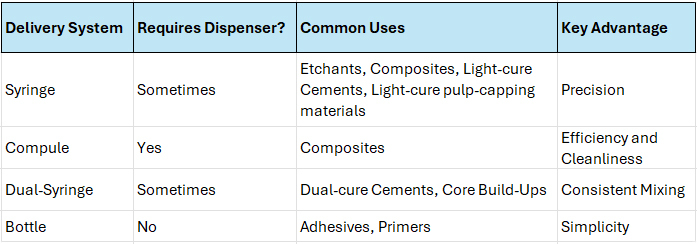
Tip-Based Syringe Systems
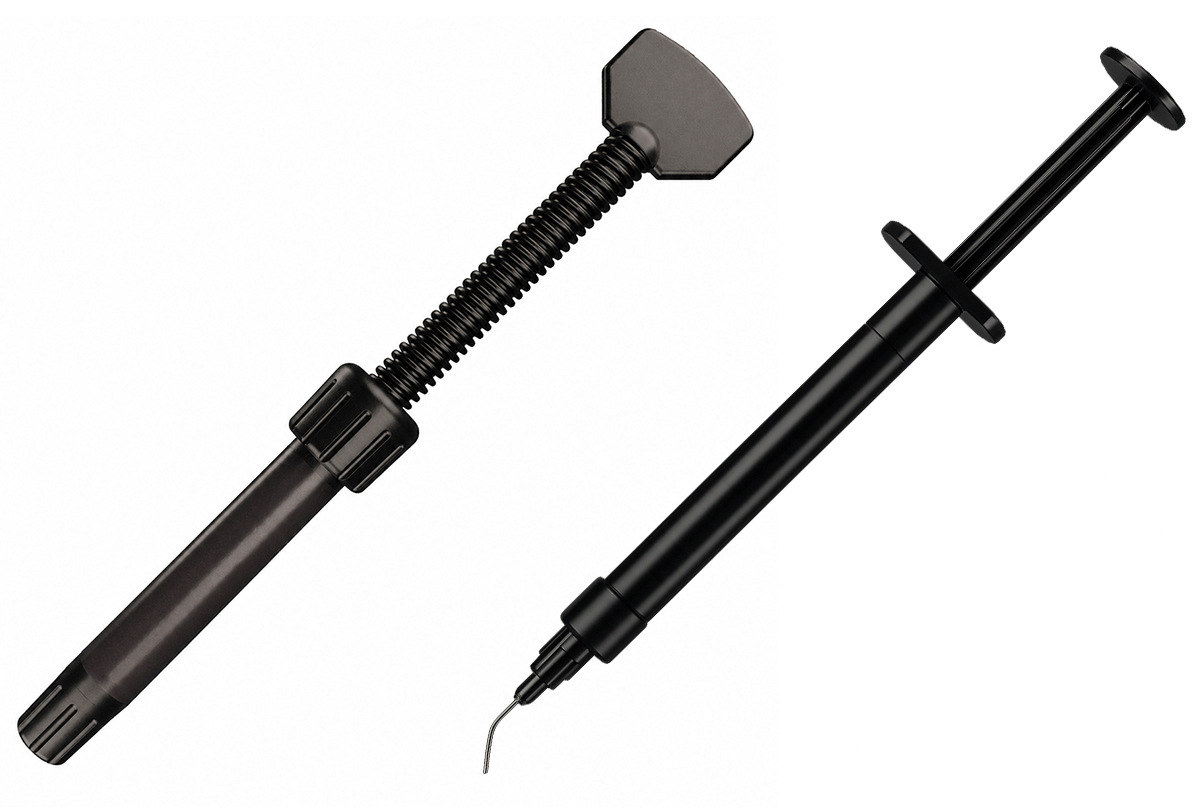
Some dental syringes, like etchants and pulp protectants, use disposable tips for delivery. Precise placement and strong control are key benefits, while single-use disposable tips help reduce the risk of cross-contamination between patients. However, they may require extra setup and can introduce air bubbles or inconsistencies with manual handling.
Direct-Dispense Syringe Systems
Other dental syringes, like some composites, dispense directly without a tip. They simplify setup and reduce waste while still providing familiar, reliable handling.
Compules / Unit Dose Systems
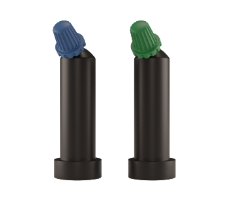
Compules are single-use units that prioritize efficiency and cleanliness. They’re fast, reduce cross-contamination risk, and simplify workflow, but they do require a compatible dispenser (like a unit-dose dispenser).
Dual-syringe Systems
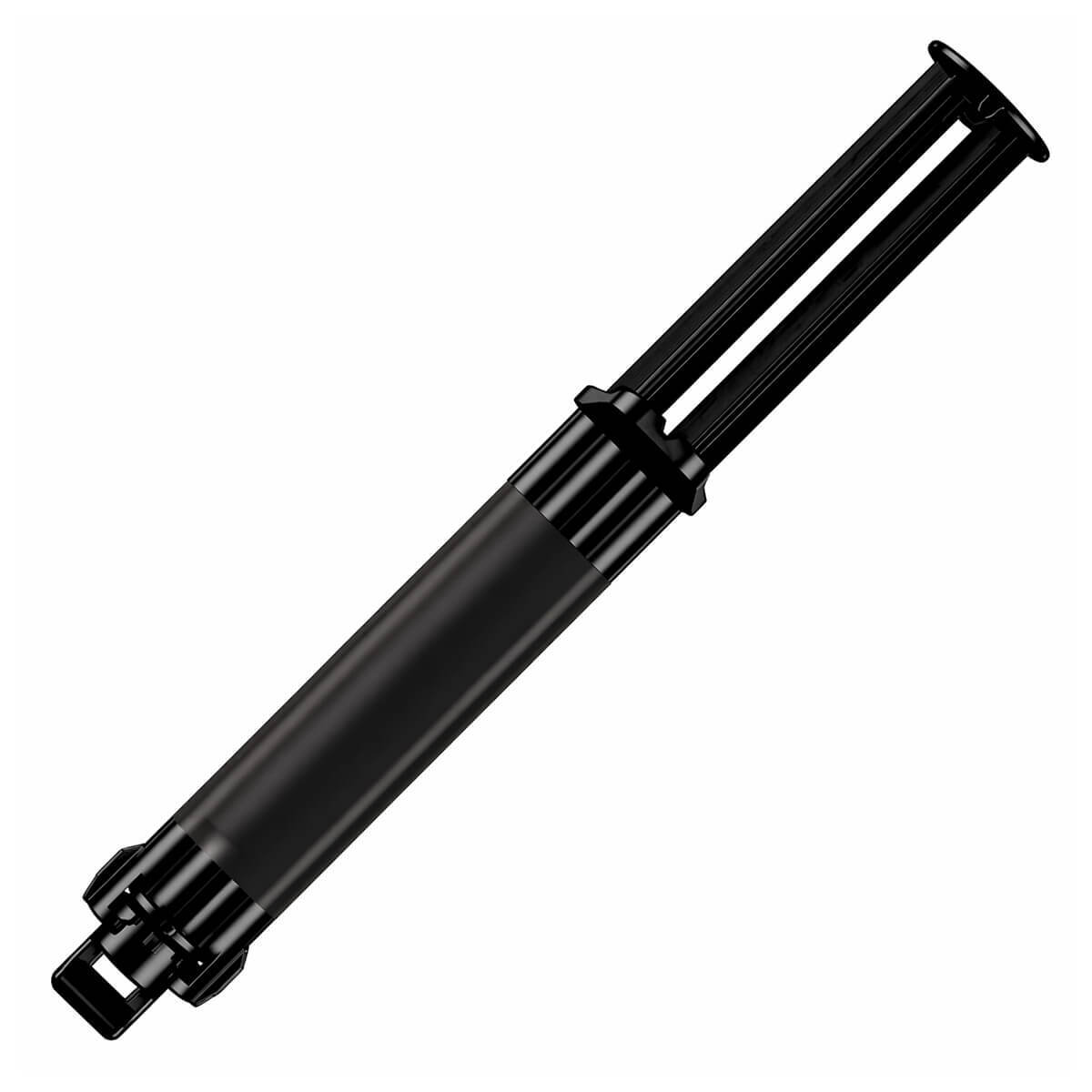
Auto-mix systems are commonly used for resin cements and core build-up materials.
They use dual-syringe cartridges with auto-mix tips that mix materials as you dispense, providing a consistent ratio with each use. Consistent mix ratios have been shown to improve material performance, particularly for resin-based materials.
But they always require the correct mixing tip and, in many cases, a dual-syringe dispenser.
Bottle Systems
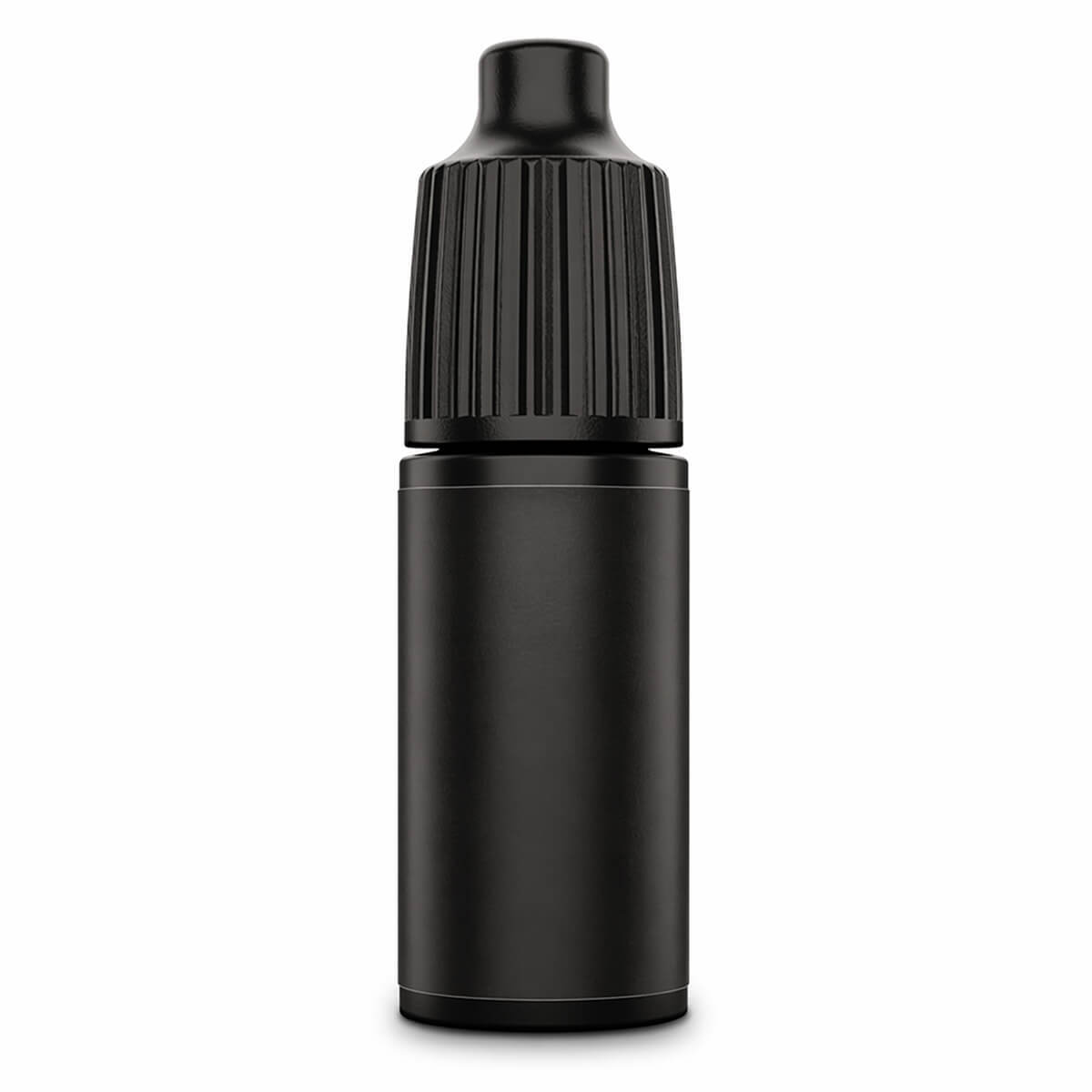
Bottles are typically used for adhesives and primers, and are one of the few delivery systems that do not require an additional dispensing device.
Because they rely on manual dispensing, bottle systems can be more technique-sensitive than closed delivery systems. Bottle design matters—for example, light-sensitive materials are often packaged in black bottles to prevent premature curing.
As Dr. Rolando Nuñez explains, “Products that are light sensitive are put in black bottles… it’s very standard across dental manufacturers.”
Do You Actually Need a Dispensing System?
Whether a material requires a dispenser depends on the delivery format, material viscosity, and manufacturer design.
For example:
- Syringes often don’t require additional tools
- Compules require a compatible dispenser
- Some dual-syringes require both a dispenser and mixing tip
As Dr. Nuñez puts it, “For the most part, packaging is very standardized in the dental industry… but you have to be very specific based on the viscosity of the material.”
Clinical takeaway: A “special dispenser” isn’t about being complicated—it’s about using the correct system for the material.
Compatibility Explained: What Works with What?
Compatibility is one of the most common sources of confusion with dental delivery systems.
- Compules → require a compatible unit-dose syringe dispenser
- Dual-syringes → require specific mixing tips and dispensers
- Syringes → typically standalone, some may require special tips
- Some systems → are proprietary
Even when systems technically fit, they may not perform the same because material flow characteristics vary by design.
What Happens If You Use the Wrong Dispenser?
Using the wrong dispenser may not cause immediate failure, but it can negatively affect handling and clinical outcomes. Materials may not flow properly, require excessive force, or mix inconsistently—especially with auto-mix systems. This can lead to material waste, stress on the device, and in some cases, poor adaptation, voids, or remakes that cost additional chair time.
Thicker materials, in particular, tend to highlight these issues because they can be difficult to express manually. As Dr. Nunez explains, “Core materials can be very thick and stackable… using the plunger (without a dispenser) can be difficult to control”.
That’s why certain materials are strongly recommended to be used with a dispenser, even if it’s technically optional.
Quick Compatibility Check
Before opening a material, confirm:
- Does it require a mixing tip?
- Does it require a dispenser?
- Is the material viscous enough to need assisted expression?
- Is the system universal or proprietary?
How to Choose the Right Delivery System for Your Practice
Choosing the right system comes down to how you actually work in practice, not just what appears standard.
Start by thinking about the types of procedures you perform most often, since different workflows naturally favor different delivery systems. From there, consider how your assistant’s workflow supports or is impacted by each option, especially in terms of setup, handling, and efficiency.
You’ll also want to weigh how much speed versus control you prefer chairside, along with how important consistency is for the materials you use day to day.
There isn’t a one-size-fits-all answer here—but there is a right fit for your specific workflow.
Final Takeaway: It’s Not Just About Convenience
Delivery systems influence more than most clinicians initially expect. They play a direct role in consistency, efficiency, and ultimately the clinical outcome of a procedure.
And importantly, the idea of a “special dispenser” isn’t about adding complexity to your workflow, it’s about ensuring system compatibility so the material performs as intended.
So, the next time something doesn’t fit, doesn’t flow, or doesn’t feel quite right during a procedure, it’s worth pausing and asking a simple question: Am I using the right system for this material?
FAQs
Do all dental materials require a special dispenser?
No. Some systems, like bottles and certain syringes, are self-contained. Others, such as compules and dual-syringes require compatible dispensers and mixing tips.
What happens if you use the wrong dispenser?
Improper compatibility can affect material flow, mixing consistency, handling, and clinical outcomes.
Want to go deeper? Check out our BISCO Bite on one-bottle vs. two-bottle silane systems to better understand how delivery formats impact performance.