
TheraCal LC Calcium Release
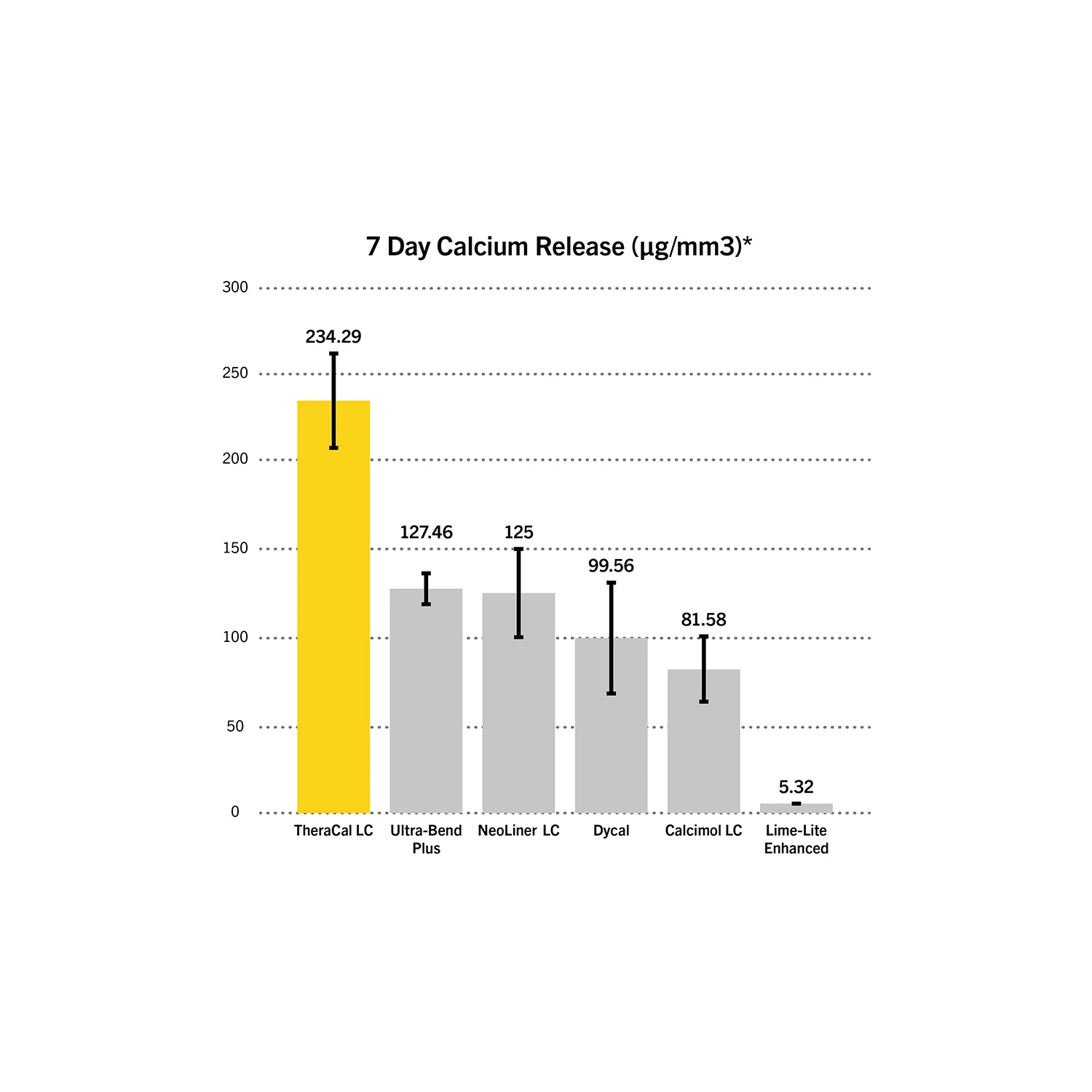
Calcium supports pulpal healing by elevating pH, aiding hydroxyapatite formation, and promoting dentin bridge development1, 2-5. An alkaline environment also helps reduce bacterial growth.6-7
The benefit isn’t just calcium presence, but how much is released and for how long. Some liners release limited calcium or only briefly, reducing their ability to maintain a favorable environment.
Greater and sustained calcium release further enhances these effects by maintaining an alkaline environment over time and supporting ongoing secondary bridge formation and pulpal vitality.1,3,7
TheraCal LC is designed to release calcium while maintaining an alkaline pH, supporting its use in both direct and indirect pulp capping.*2-4
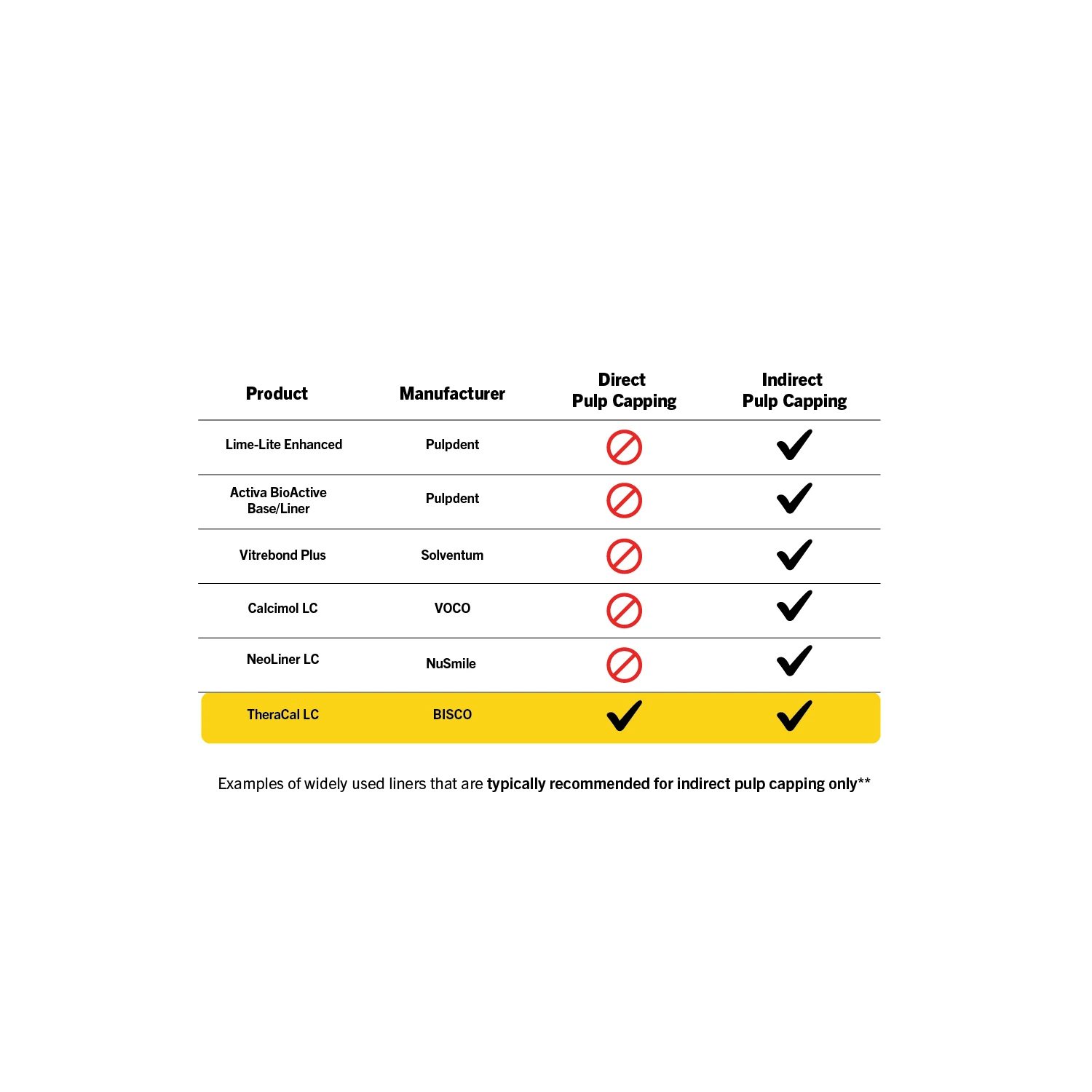
Not all liners are indicated for Direct & Indirect Pulp Capping
Some dental liners are indicated for both direct and indirect pulp capping, while others are indicated only for indirect pulp capping.
Materials that are not recommended for direct pulp capping may have characteristics that are less suitable for placement directly on exposed pulpal tissue. For example, some liners may have a more acidic pH, which can be detrimental to pulp cells1,8, while others may release fluoride levels that negatively affect pulp vitality when placed directly on an exposure9. In other cases, manufacturers simply do not indicate their products for direct pulp capping based on product design, composition, and intended use.
TheraCal LC features an alkaline pH10 and is suitable for use in both direct and indirect pulp capping procedures. With TheraCal LC, no additional products are required for direct pulp capping, helping simplify the procedure while reducing steps and materials.
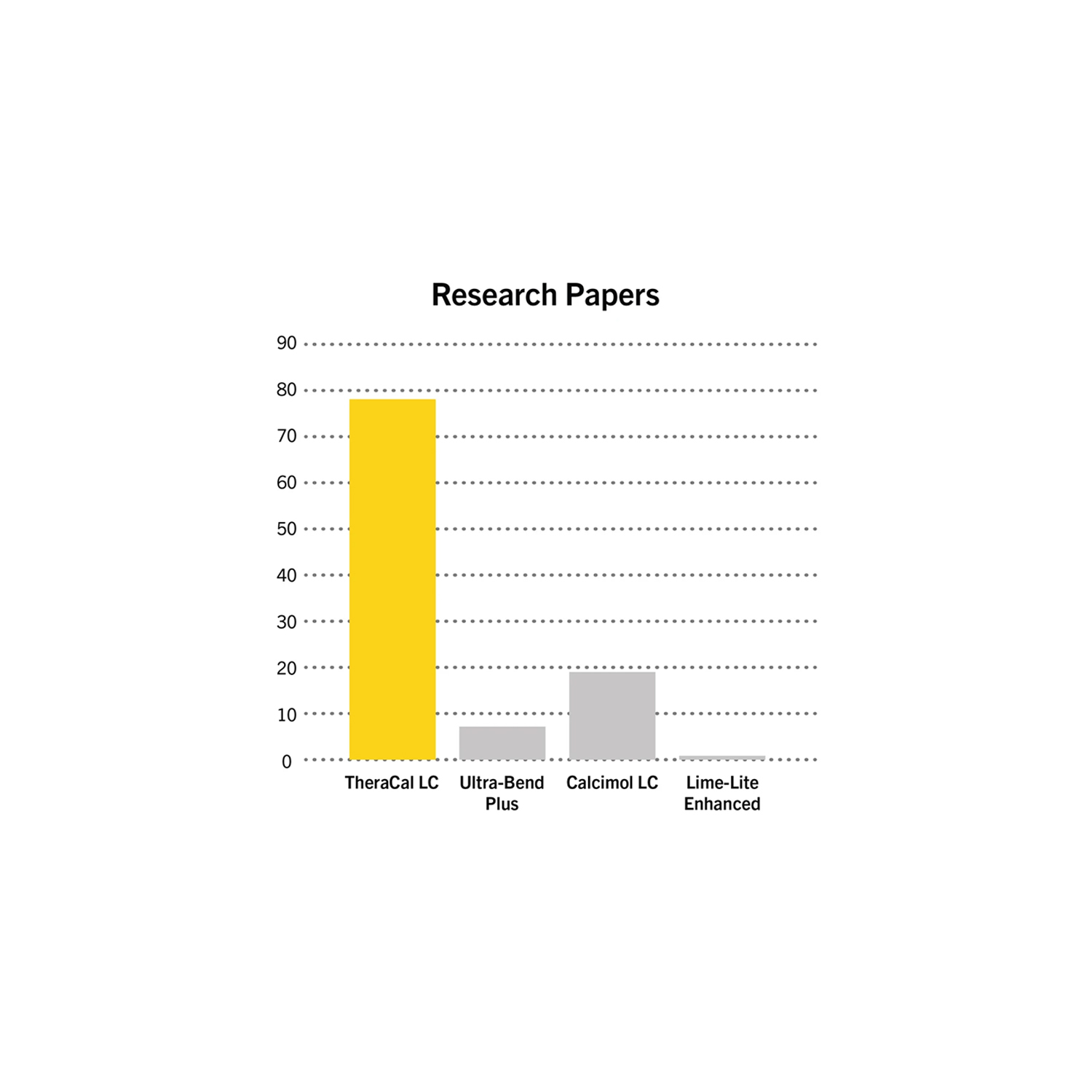
One of the Most Researched Liners on the Market
Based on searches of PubMed and ScienceDirect from December 2025, TheraCal LC stands apart in published research support.
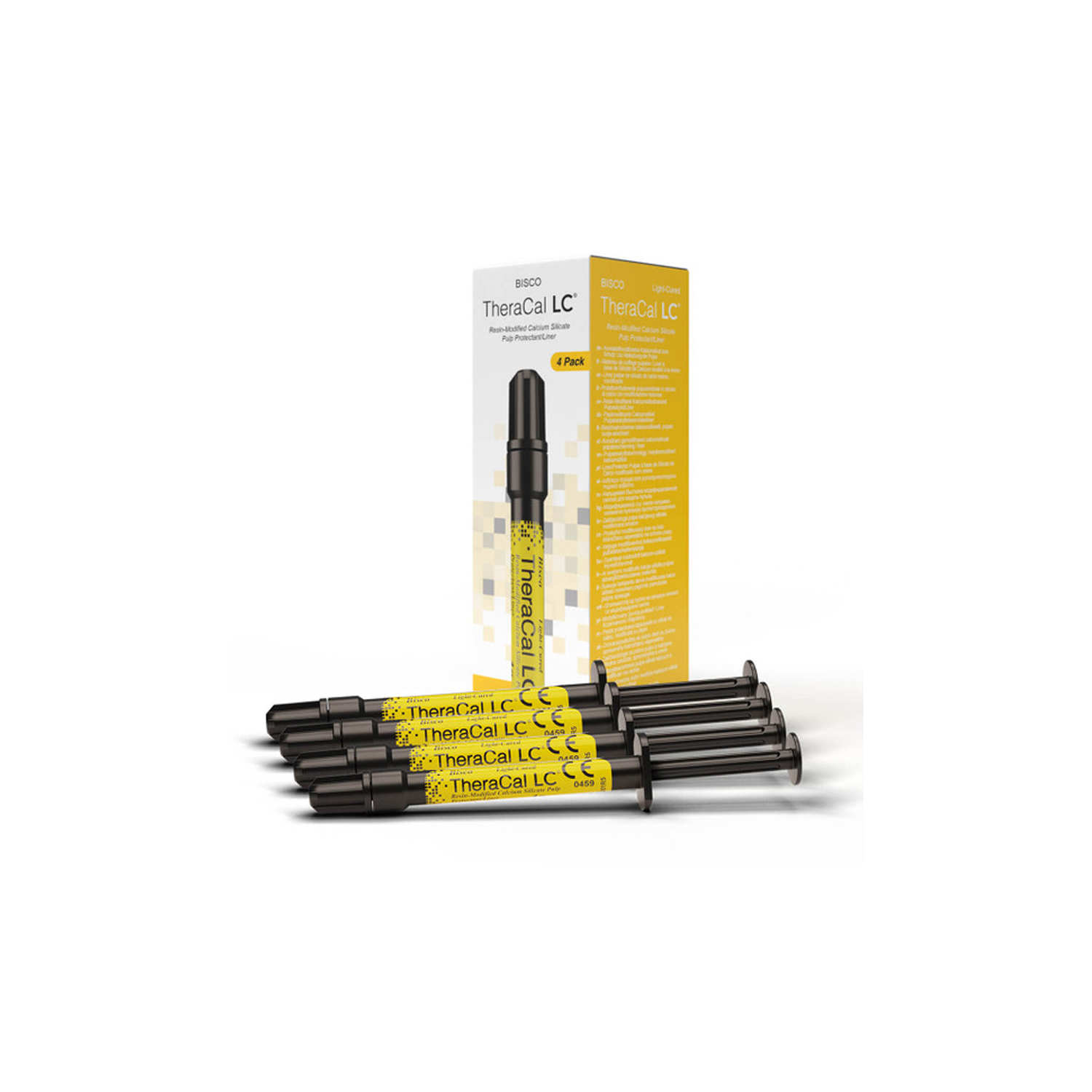
How to Buy TheraCal LC
- 4-Syringe Pack: $168 USD
- Single Syringe: $57 USD

**Per manufacturer IFU or website.
1. Okabe T, Sakamoto M, Takeuchi H, Matsushima K. Effects of pH on mineralization ability of human dental pulp cells. Journal of Endodontics. 2006.
2. Apatite-forming Ability of TheraCal Pulp-Capping Material, M.G. GANDOLFI, F. SIBONI, P. TADDEI, E. MODENA, and C. PRATI J Dent Res 90 (Spec Iss A):abstract number 2520, 2011 (www.dentalresearch. org)
3. Rathinam, Elanagai, et al. “The calcium dynamics of human dental pulp stem cells stimulated with tricalcium silicate-based cements determine their differentiation and mineralization outcome.” Scientific Reports 11.1 (2021): 645
4. Cannon, Mark, et al. “Primate pulpal healing after exposure and TheraCal application.” Journal of Clinical Pediatric Dentistry 38.4 (2014): 333-337
5. ADA definitions for direct and indirect pulp capping at: www.ada.org/en/publications/cdt/glossary-of-dental-clinical-and-administrative-ter
6. ElReash, A.A., Hamama, H., Eldars, W. et al. Antimicrobial activity and pH measurement of calcium silicate cements versus new bioactive resin composite restorative material. BMC Oral Health 19, 235 (2019). https://doi.org/10.1186/s12903-019- 0933-z
7. Kim, Ryan Jin-Young, et al. “An in vitro evaluation of the antibacterial properties of three mineral trioxide aggregate (MTA) against five oral bacteria.” Archives of oral biology 60.10 (2015): 1497-1502.
8. Hirose Y, Yamaguchi M, Kawabata S, et al. Effects of Extracellular pH on Dental Pulp Cells In Vitro. Journal of Endodontics. 2016.
9. Kranjevac T, et al. Cytotoxic effects of glass ionomer cements on human dental pulp stem cells correlate with fluoride release. Med Chem. 2012.
10. Gandolfi MG, Siboni F, Prati C. Chemical–physical properties of TheraCal, a novel light-curable MTA-like material for pulp capping. International Endodontic Journal. 2012.